By: Rick Landers

Isaac Holmes at Future Makers 2024 6-11-24
Our interview today with Welsh artist, Isaac Holmes, presents his personal path learning his craft from a very early age to today. And for Isaac, like many, he’s driven by a passion for music and a need to dig in to the discipline of learning from his guitar idols, then raising his game to create his own stylish original compositions.
Success with music has many definitions and there are roads to success that may be intrinsic, like the moments of joy one gets nailing down a musical phrase on an instrument or vocally, while others are more aligned with the steps that lead to commercial success.
And through a certain amount of serendipity, Holmes, was discovered by many after he loaded his music on-line, that earned him a solid following of over 30,000 fans. And as good fortune would come his way, his talent was appreciated and promoted by Robert M. Knight, a legendary rock photographer and one of the founders of a project called, Brotherhood Of The Guitar, that seeks out impressive young musicians and helps mentor and nurture young artists.
The Brotherhood has an excellent track record discovering young prodigies around the world, as well as helping them make connections with some of the top musicians in the world. So, given a combination of hard work, natural talent and deserved “lucky breaks,” Knight’s project has proven to employ a solid formula for selecting a new generation of phenomenal artists, one being Isaac Holmes.
With the support of Brotherhood and others, Isaac’s musical talent and artistry were recognized and helped launch opportunities for him to perform at impressive venues, that we discuss in his interview. His work includes opening for Eagles guitarist, Don Felder, as well as joining with L.A. guitarist, Jensen Gering, on the Next Gen stage, along with Isaac receiving praise from such guitar masters as: Steve Lukather (TOTO), Jennifer Batten (Michael Jackson) and the great jazz-fusion icon, John McLaughlin.

Holmes is definitely making a name for himself, as he writes and composes his catchy originals, puts in the concentrated hours of work necessary to be prepared for opportunities that have come his way, and future opportunities that are certain land on his doorstep.
Guitar International will continue to work with Brotherhood Of The Guitar to support a new generation of guitarists, to highlight their exceptional talents, as well as continue adding legendary and other deserving musicians to its pages that are world-class, offer up interesting takes on music – we’ll be featuring a guitarist who records his music accompanied with Orca whales soon! – and show promise in treating us to a spectrum of musicians who will inform, entertain and inspire our readers. And, we are honored to introduce and present Mr. Isaac Holmes to our valued GI readers.
******
Rick Landers: Tell us about yourself, where you’re from and if you live elsewhere a bit about growing up with a passion for music…guitar, the experiences you’ve had performing in places from open mics to some of the more popular/known venues/gigs; your latest accomplishments and your idea of success now and if it has changed since you began your music journey.
Isaac Holmes: My name is Isaac Holmes. I’m a 20-year-old Welsh musician, artist and producer. I make music that blends atmospheric and progressive elements with modern songwriting. I started playing guitar at age six, and by age twelve I began performing in small venues and teaching myself to record at home.
My passion for music really came so intrinsically, so much so that I don’t ever remember ‘getting into it’.
There was always the classic story of music being played around the house, and although neither of my parents is a musician, my grandmother on my mother’s side was an excellent pianist, and my Grandad on my father’s side is a great bluegrass player.
Since then, I released my debut EP, My Former Lover and the Longing for Home, in 2025 and have performed its material at venues and festivals around the world, including the Royal Albert Hall and Crossroads Guitar Festival. I’m currently working on my debut album, planned for release in autumn 2027, along with a series of shows.
Starting out, my idea of success was always about being able to make the music I want to make, when I want to make it. So, in so many ways I already consider myself successful because I get to do what I love every day and make a living from it, which I always try to take the time to recognise.
That said, I’m a very ambitious person and have many specific goals I haven’t yet reached, so I never want to rest on my laurels, as they say.
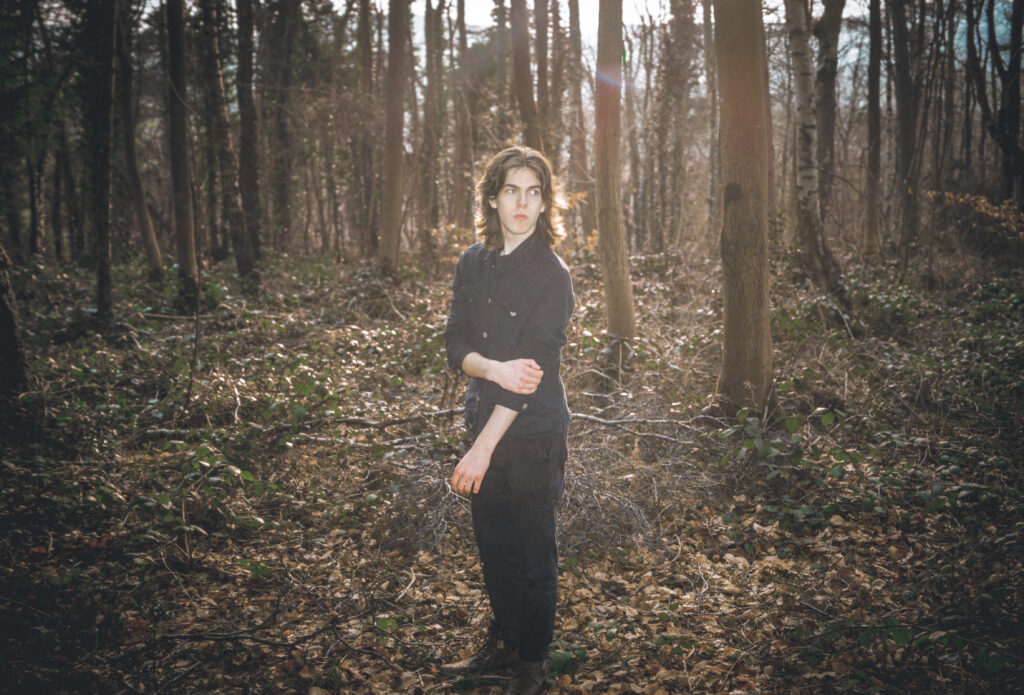
Isaac Holmes – photo credit: Evan Spray
Rick: I’ve found that although there are a lot of very talented young musicians today that more times than most, those who pull to the front of the pack are not only passionate about their music, but have had champions on the way who have helped nurture their careers, sometimes financially, but often by helping them make pivotal connections in the music industry and artist communities. Please, tell us about how you became a talent with The Brotherhood of the Guitar, as well as what led up to it as you developed your skills.
Isaac Holmes: Yeah, it seems like so many amazing young people are making music right now, and I’m totally in awe of a lot of them. It’s true that people who have had more privileged upbringings and more money to spend on nurturing a talent often do get ahead, particularly in this industry, but what I think is one of the amazing things about today’s technology is the means of social media acting as a way to balance the playing field for everyone, not only in knowledge, but also in visibility.
When I first started, I had no connections to the music industry at all, but through posting on social media, it opened the doors for anyone to watch me play, and that brought about some really influential opportunities, like becoming a part of photographer Robert Knight’s Brotherhood of Guitar and ultimately building my relationship with Ernie Ball.
Before any of that, though, I have to credit the amazing guitar teachers I had growing up, who all at some point took the time to share their insights on the instrument. Despite the wealth of knowledge online, I still think it’s important to have the right musical encouragement growing up, and I hope one day I can pass down whatever knowledge and experience I have to other people, because it can be really hard out there, man.
Rick: How did you progress with respect to the types of places or venues you’ve played and what have been some of the most memorable highlights you’ve experienced, including Crossroads and I believe at Royal Albert Hall while working through challenges and building an audience or fan base?
Isaac Holmes: Playing the Royal Albert Hall and the Crossroads Guitar Festival have most certainly been the highlights of my live career so far. Playing the Royal Albert Hall was a genuine dream come true; it wasn’t until I stood there on stage that I was really taken aback by the sheer amount of history and talent that had graced the room. It was also at that exact moment, just before soundcheck, that someone kindly reminded me that David Gilmour had been performing in the same spot just a week earlier.
Ultimately, I’ve been very fortunate to have had these opportunities presented to me at such a young age, and I’m super grateful to everyone who gave me the chance and trusted me. I’d like to think that perhaps what people saw in me that led to these opportunities was a combination of experience and artistry.
I’ve been gigging since the age of 12, which meant I had plenty of time to learn how to perform for an audience during my younger years, and I’m super thankful for that.
From there, it’s been about honing my skills both live and in the studio, and building an artistic vision where both worlds can work in tandem.
In my opinion, having that artistic vision and understanding the relationship between those two worlds is one of the best things to develop if you want to stand out. It can certainly be really tough, though and take a long time to figure out.
Earlier this year, I was trying to figure out how to present the songs from my last EP and what I wanted to convey as a live artist. It was really challenging.
One thing I had to remind myself was to let go of the idea of trying to recreate the recording and instead reimagine the arrangements in ways I perhaps didn’t get to explore when recording them. Especially nowadays with streaming and the ease of listening to every record ever, I don’t think people want to hear my attempt at recreating the record when they can listen to it in the car on the way to the show.
I wanted the audience to hear these songs in a new light with spontaneity, improvisation and a lot of room for everything to go wrong. That’s something I’ve always loved and appreciated about the jazz world. Having room to express yourself freely in that very moment, and having that be entirely indicative of what mood you’re in that particular night. I love that the audience can hear and feel that; to me, that’s a lot of the point of live music.
As for the new album, well, I think that’s going to be just as much, if not more, of a nightmare to figure out!
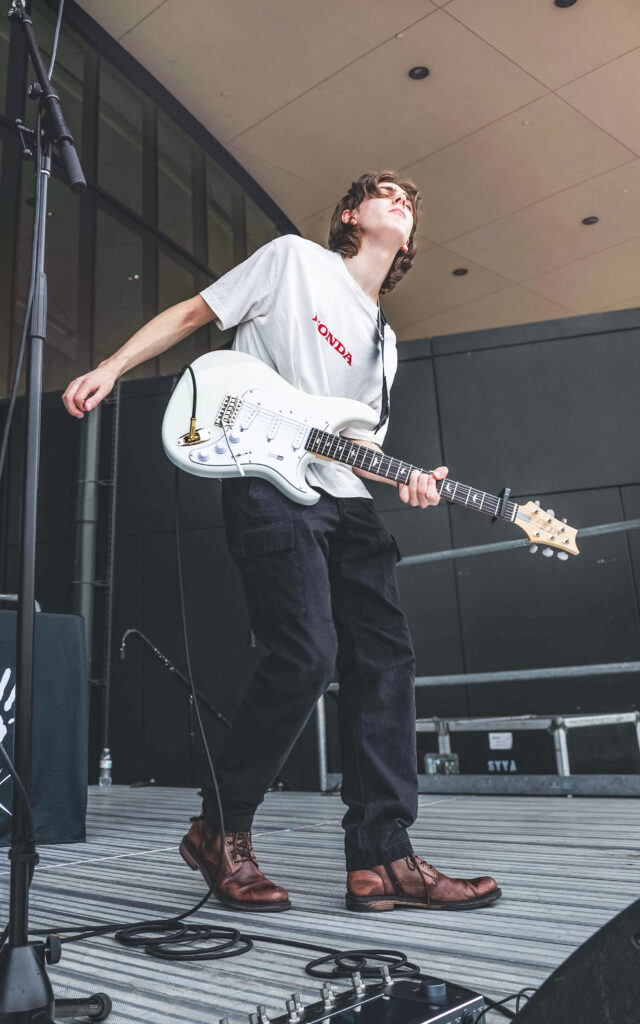
Isaac Holmes at the Crossroads Guitar Festival
Rick: You were recently invited to see guitar builder, Paul Reed Smith, being inducted into Rockwalk, as well as worked the Martin Guitar opening party before Crossroads. What were those experiences like and how did your performance work out with Jensen Gering? Play together or did you perform your own sets?
Isaac Holmes: Yeah, when I got the call asking me to open for the induction of Paul Reed Smith at Crossroads Guitar Festival, with John Mayer doing the honours, I was immediately both flattered and terrified. PRS is a brand I’ve recently been building a relationship with, and of course John Mayer is John Mayer, so the pressure was certainly on. Of course, I made sure to prepare months before the event and ultimately had a great time, and people seemed to really enjoy the set.
That whole weekend was so much fun and full of so many great moments, from playing on stage with Jensen Gering to stumbling my way through Pat Metheny tunes with Pedro Martins backstage. I got to meet so many great people, and I’m super grateful I got to be a part of the Crossroads Guitar Festival for a second time. I think they’re doing something really special.
Rick: I see that you had musicians that you follow early on and I expect influenced your playing style, who were some that impacted you and in what ways? And, have you had opportunities to meet them or even perform with them?
Isaac Holmes: Man, it’s always such a struggle to narrow down the players I’ve been inspired by because so many come to mind.
When I first started playing, I idolised all the classic guys like Slash and Mark Knopfler mostly because of their unmistakable sound and style. As I got older, I started getting into all kinds of players like Pat Metheny, Guthrie Govan, and George Benson, to name a few. Of course, players like Jeff Beck, Mateus Asato and Derek Trucks are a masterclass in tone and touch that I’ve listened to a lot.
It’s hard to include all the musicians who have inspired me, and there have certainly been a few full-circle moments with players I loved growing up, some of whom I’ve had the pleasure of getting to know. Players like Steve Lukather, Mark Lettieri and John McLaughlin are all guys who have been ‘pinch me’ moments when hearing compliments from them.
Rick: What guitars did you start out with and have you found that you’re not only into the same guitars as those you followed, and they work for you or have you explored other guitars and other gear more as tools of the trade to, say meet your sonic interests, maybe as your taste in music may have changed? And, what gear are you using now?
Isaac Holmes: I played all sorts growing up. I remember my first electric guitar was an ESP LTD, which I loved because that’s what Metallica used.
Since then, I’ve played Ernie Ball Music Man guitars almost exclusively, and they’ve been my go-to guitars for just about everything. For my last EP, everything electric you hear is one of my Ernie Ball guitars. They’re just so diverse and easy to play, and they’re great to record with because of their amazing tuning stability.
I’ve also been using a bunch of new (to me) gear recently, either stuff that I’ve found second-hand or had the pleasure of receiving from companies. I found this cheap ‘tape’ delay pedal for £10 on eBay, and it’s totally chaotic and unpredictable, so I’ve been using it a bunch on the new album.
I’ve also been using a piece of gear called a Submarine Pickup, which is essentially a pickup that sticks onto the guitar and lets you send each individual string to a separate output. The sonic possibilities are endless with that thing, so that’s been a lot of fun to experiment with.
Of course, like many others, I’ve joined the Quad Cortex club and started using that for all my live shows, which has been unsurprisingly incredible.
I’ve been using pretty much all Neural DSP plugins on my records, so knowing I’m able to get the exact tones live even as a starting point is so useful. It’s also let me do a whole bunch of ambient textures and complex routing that just wouldn’t be possible without travelling with a snooker-sized pedalboard.
Guitar-wise, I started using Taylor acoustics in 2025, specifically the 814ce, which has just blown any other acoustic I’ve ever used out of the water. It records so incredibly well and feels so great to play, almost like playing an electric.
Also, this year, a fan very generously gifted me a custom-modded Stratocaster which they redesigned themselves. They bought a guitar they found online, painted it, replaced the pickguard, and swapped out the switches, so that’s been so incredibly cool to have as part of my collection now.
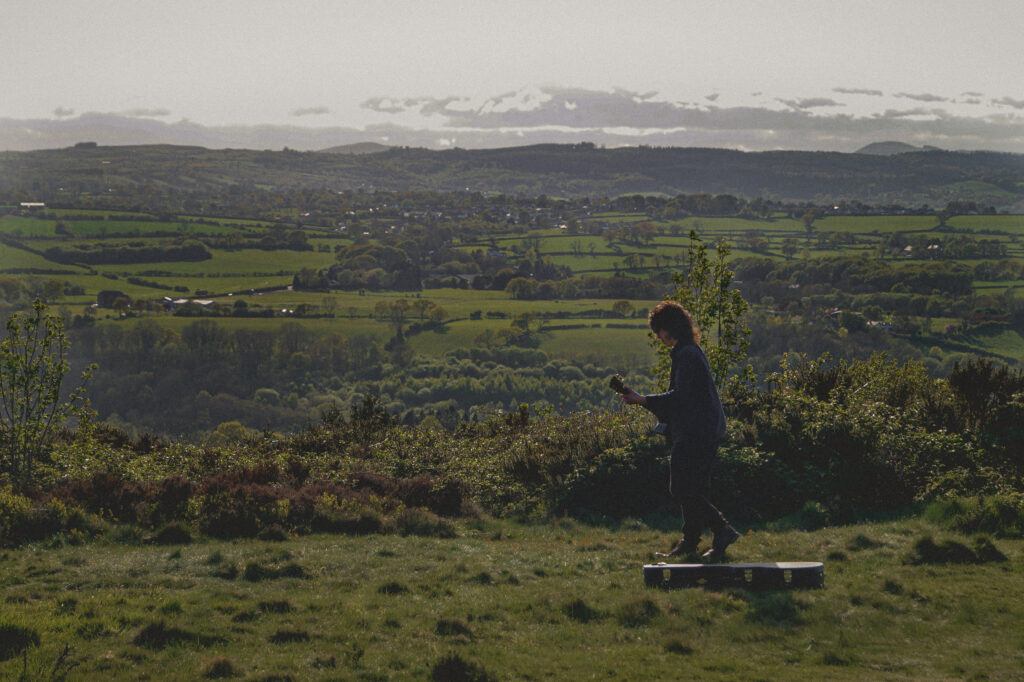
Isaac Holmes – photo credit: Evan Spray
Rick: When you started out were you into home recording, using things like Garageband, Pro Tools, and others or were you able to get into a professional studio to begin to launch your career? Tell us about the path you took and to what degree do you now get involved with the production and engineering side of recording and production?
Isaac Holmes: Yeah, that’s a great question that I’m super keen to talk about. Everything I’ve ever released has been recorded at my home studios in Wales. I record, engineer, produce, and mix everything you hear of mine; I love doing it.
Doing everything on your own, though, of course, comes with challenges, the most obvious being a huge learning curve at the beginning that requires a lot of time and dedication. From the age of twelve, I began obsessing over recordings, the sound of my favourite albums, recreating drum sounds; it was an obsession that honestly still hasn’t gone away. I’d spend all day covering a song using the same miking techniques and effects, trying to match the original recordings.
I suppose I’ve found that learning to record and produce is a lot like learning an instrument: you learn to mimic the people you love, then find your own style and sound through the effort of wanting to sound like them. Of course, I still have a lot to learn in the art of recording, and I find that each project that comes around, whether it’s for me or someone else, opens up a whole world of techniques and ideas I hadn’t ever thought about before.
I don’t think I’ll ever make a record completely in a commercial studio. In this day and age, I find a lot of pristine, high-end studio recordings to sound quite mundane and often lack personality, mostly because it’s just so easy to achieve a pitch-perfect, larger-than-life sound now.
I love when you can hear the chaos of a home studio come through on a recording: the untreated room, the high noise floor; it all adds personality, which matters more than ever in today’s AI-riddled world. For my first EP, I really wanted to capture the sound of my childhood home and its surroundings. You can frequently hear trains passing by from the railway track across from where I live, birds singing, kids playing, some of which were me from when I was a kid. That was the whole point of the record: to make something that was the sound of my childhood.
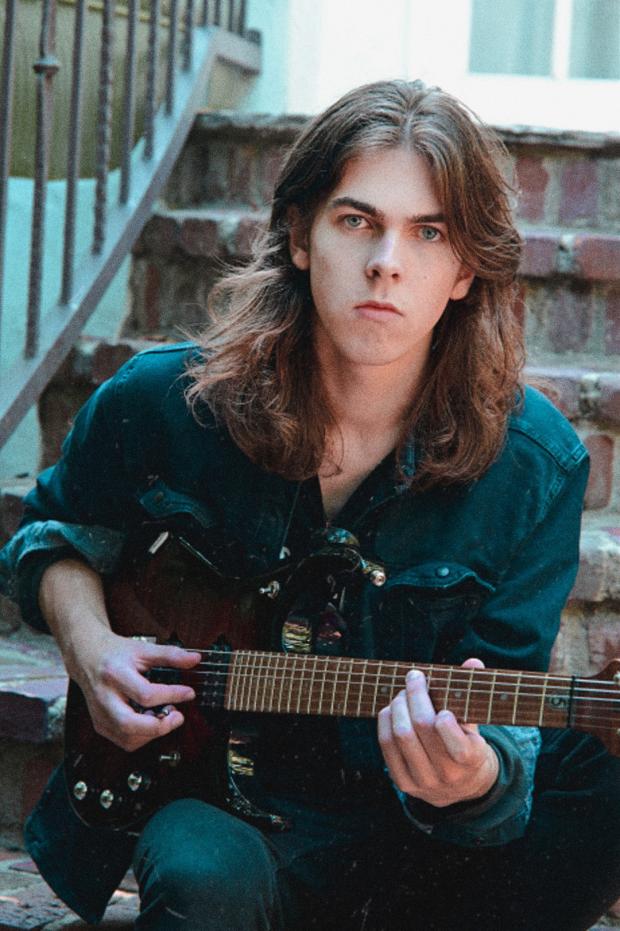
Isaac Holmes – photo credit: Robert M. Knight
For the new album, I’ve gone with a similar approach, only less considered and much more untamed. I’m really letting loose on the production, cranking and crushing drum room mics with minimal gating, using real amps that feedback wildly, recording acoustic guitars in big stone hallways; all stuff that’s super fun and creates a defined vibe within seconds. I find that to be far more exciting than achieving a similar, less unique result with a bunch of plug-ins. Plus, the idea of committing to that sound before you mix is super fun and helps me get stuff done a lot quicker.
That’s not to say I haven’t been trying to perfect the hell out of the record, though; I’ve been working on it since April of 2025. I already have a few ideas for the album after this one I’m currently working on to really indulge in the idea of recording a group of musicians live in the room and utilise the idea of instant live reactivity and kinetic energy with one another; that feels like something that is missing in a lot of commercial records today and something that I, too, haven’t fully explored yet.
Rick: What are you playing and do you have a dream guitar that you’d like, vintage or new, acoustics and electrics?
Isaac Holmes: I’ve never been much of a gear fanatic when it comes to the technical aspects. Most of the time, I don’t know what pickups are in my guitars or even what wood they’re made from. I’m never really looking for new guitars to use as much as I’m looking for new pedals or studio equipment. That said, at some point I’d love to build a signature model tailored to my exact style and overall needs. I’m always thinking, “If I could combine this part of this guitar with this part of that guitar, then that would solve all my needs.” I have a lot of ideas for the kind of things I’d like when that time comes.
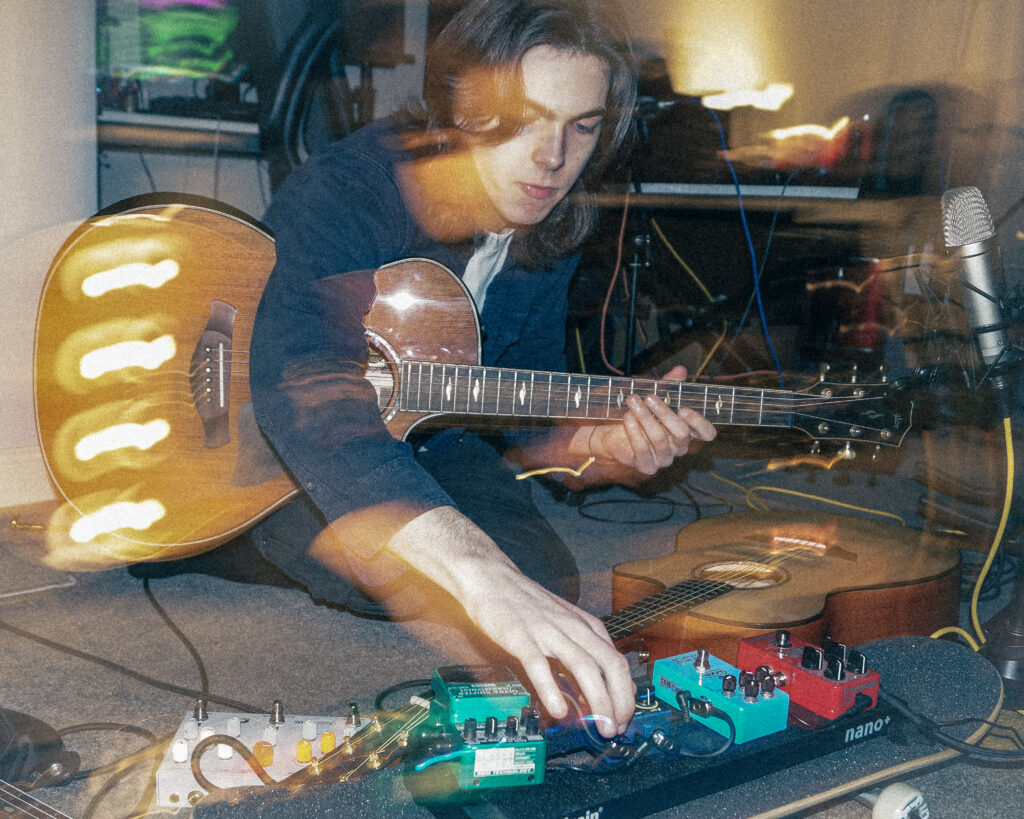
Isaac Holmes studio – photo credit: Evan Spray
Rick: You’re a multi-instrumentalist? What else do you play and what other instruments lie ahead for you to get into? Any international cross-cultural instruments or primarily what we tend to find in the States?
Isaac Holmes: Yeah, for the past year or so I’ve been taking a deep dive into instruments that are less familiar to me in order to create a new sonic palette and identity for this album. I’ve found myself playing numerous organs, violins, badly, and super wacky synths that I have little to no idea how to use. It’s been great fun and has really opened the door to what’s helped shape the album’s sound.
Sonically, the album’s theme has kind of accidentally turned into this fusion of really old and new-sounding instruments. I bought a Hammond organ made in 1964, a tape machine from the 1970s, and a really old reed organ. Contrasting them with super modern-sounding drums and almost futuristic-sounding guitars has been really interesting and definitely on theme with the album’s underlying concept. I think I definitely need to improve my violin technique though; a lot of pitch correction has been used to make it sound somewhat usable!
Rick: I understand that your release, “In Time” had one reviewer cry. What were your thoughts when you saw that?
Isaac Holmes: Haha yeah, that honestly had quite a profound effect on me. It’s one thing to read all the lovely comments and messages from people saying how much that song in particular has affected and helped them in their lives, but seeing someone react to it in real time in such a way was very surreal.
After watching it, I started thinking about all the times I never see someone deeply affected by my work, or pull the EP out of its vinyl sleeve and fully immerse themselves in the music I’ve created. It’s probably best I don’t think about it all too much, though; I’d freak out and never finish my album.
I really am very proud of that song, more so than any other I’ve made. It took me over two years to write and record, mostly out of fear, overthinking, and going back and forth on sections. In the end I just said f*ck it, it’s going to be seven minutes long and I’m not going to compromise the structure, whoever gets it, gets it. It’s ended up being my most successful song to date, and I don’t think it’s a coincidence that it was the song where I let my full vision loose and was unapologetically myself.
Rick: Have you been able to snag any endorsee deals with any top guitar or other gear name brands? How do those kinds of deals get traction from the beginning to actually signing a deal?
Isaac Holmes: Haha, I’ve been very lucky to have built various relationships with guitar and gear companies over the years. Most, if not all, have come from social media with people enjoying my videos, either wanting me to try a piece of gear out or generally wanting to support me with the idea that I’ll add their piece of gear into my everyday repertoire. I’ve never gone out of my way to seek these things out; that’s not where the signal is, but these relationships have been so helpful in making the music I want to make, and I’m so grateful for them.
Rick: Do you find you prefer being a solo artist or have you found being part of a band more to your liking? And if you do both, what are the best parts of both and the challenges?
Isaac Holmes: I love being a solo artist. I also loved being in a band when I was younger; I still think the things I learned from being in a band are why I’m here with a career today. I think it’s important to pursue both at some point in one’s career. Being a solo artist, I find I miss the camaraderie of an ‘us against the world’ mentality, but I’ve always been introverted, especially creatively, so I find being able to make records on my own the best. I also love the independence and responsibility it brings to build a whole world and vision to life as a solo artist.
Of course though, those things are exactly why it can be so challenging on your own. You have to hold yourself accountable when something doesn’t go right or when you can’t make something work, and that can be some of the lowest and loneliest times. Fortunately for me, I’m very lucky to have people around me, both in and outside the industry, who understand these things and can help me push forward in those times.
Rick: And what about other cultural music, like the guitar styles of musicians from Mali, India, Japan; something completely foreign to you that you might initially find a bit strange, but intrigue you? I recall George Harrison and Shawn Phillips getting into Indian music and studied the sitar; any interest in exploring those different realms of music or considering fusing Western music with unusual instruments from around the world?
Isaac Holmes: Yeah, it’s definitely something I’ve thought a lot about. As I approach the final stages of making this album, I’m already thinking about where to go next and how I can do things differently compared to the last two records. Being inspired by different musical cultures is definitely something that can open up a whole world of new possibilities. I suppose, though, I’ve always thought that in order to create something that doesn’t sound pastiche or derivative, you really have to study deeply and take the time to go beyond the sound itself and understand the lifestyle and overall habitus around a musical culture. That’s not something I’ve taken the time to do yet, but it’s absolutely something I’m keen to try.
Rick: Do you have a band; Who are you performing with now and what do you or they bring to the music you all perform?
Isaac Holmes: I’ve been doing a lot of solo shows recently, which have been super fun and challenging. Getting the arrangements and songs to come across the way I wanted, with the obvious limitations of being the only person on stage, was a puzzle that honestly took me all year to figure out. Getting the Quad Cortex was a big part of making that happen; it allowed me to loop, freeze, and switch between drastically different sounds in an instant.
Right now, I’ve been gearing up to do some shows as a duo with my dear friend and drummer, Sol Bryant, who has played on a lot of my songs. I’ll be on vocals and guitar, and he’ll be playing keys and a bunch of other synth-related stuff. The approach has been to take what I’ve been doing for the solo shows and expand on them, so we’re incorporating more textural elements, rhythmic loops, and other cool stuff to enhance the songs.
Early on, I opted for a no-playback policy, so no parts are pre-recorded apart from a couple of drum loops and samples. This was mainly because I wanted to freely improvise and extend sections each night without being bound to a click or set structure. It also makes for a more exciting show; you never know when something is going to crash or go off the rails! We both really have to pull our weight to make the show work by focusing on timing with one another, as well as switching sounds spontaneously and seamlessly; it’s hard, man.
I’m very grateful to Sol for letting me drag him into this unworldly vision of playing these songs, and I have to give credit to him for being so open to pushing the boundaries of what’s humanly possible with four limbs!
Rick: Creative types, I’ve found, are curious explorers seeking out new interests, so a few guitarists I’ve spoken with are into other arts or interests beyond music, like painting (Joni Mitchell) or hot rods (Jeff Beck, Danny Gatton, Leland Sklar). What about you or are you strictly a music focused guy?
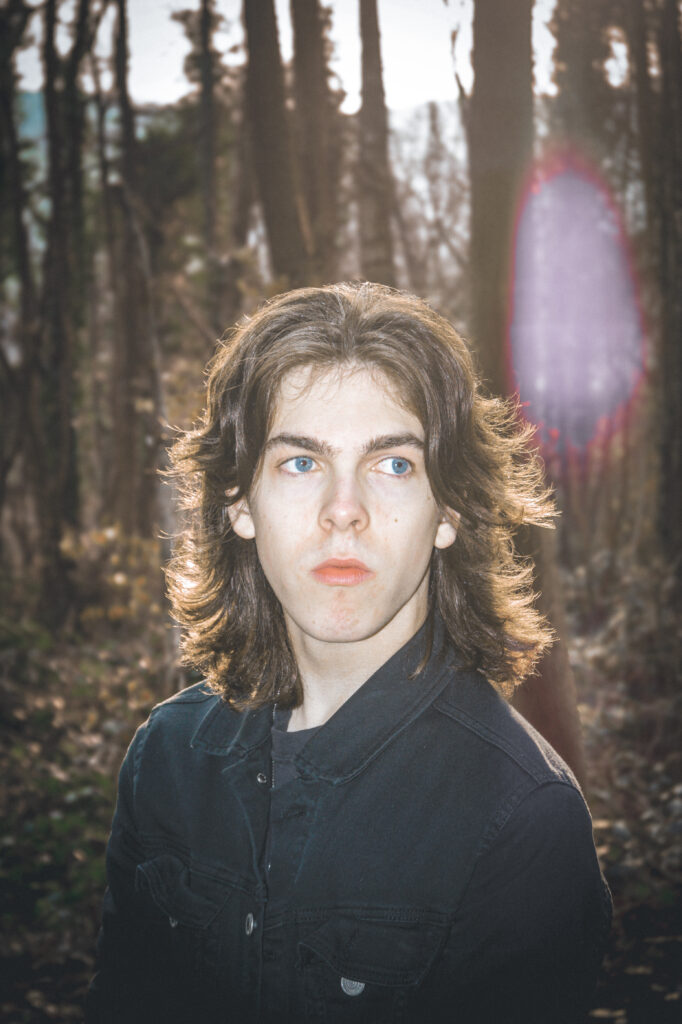
Isaac Holmes at Forest Close – photo credit: Evan Spray
Isaac Holmes: I wish I had a better answer. I’m music through and through. It’s the only way I can make as much music as I want to make and get to where I want to be. That’s not to take away from the importance of a good work-life balance. I love spending time with my family and friends, but even that’s enough for me to want to get back and hide in the studio. Who knows, maybe I’ll pick up crochet by album three to keep myself sane.
Rick: A few very passionate musicians I know started out almost or actually possessed with their love of music, one friend practiced guitar ten hours a day while at university and he’s now a full-time musician, married, has a child…Have you found you’re one of the possessed and, if so, how has that affected other areas of your life, like your social life or other more mundane responsibilities?
Isaac Holmes: That’s a good question. I’d say there are two parts to this answer. I live and breathe music every day of my life. There isn’t a day that goes by where I’m not working on something, so much so that I don’t even think about it as ‘music’ anymore; it’s just my everyday routine.
That said, I have never stuck to a set amount of practice every day for any length of time; I wish I could. I’ve always followed my curiosity on the instrument and gone down as far as I can go in that realm of exploration, even sometimes to absurd levels. Still, once that curiosity fades, or starts to form into something compositional, I shift all my focused energy onto that, and I don’t treat a practice routine the way someone might treat going to the gym.
So I suppose no, I’m not obsessed in the technical regard; however, I am absolutely obsessed with the creation of music in every way possible from performing, writing, recording, you name it and if playing for ten hours a day is what feels like it will take me somewhere creatively, then I’m all for it. To be honest, I find that the best way to truly internalise something, whether it be a scale, mode or just a general concept, is to compose or immediately make use of it in some form; otherwise, I just forget it.
In terms of how my obsession with music affects the other aspects of my life, it can certainly be hard. Having something that is both a job and a passion can be difficult to navigate, and it can be especially hard for other people to understand sometimes. I think there have definitely been times in my life when I’ve sacrificed time with friends and family and not pursued relationships to the best of my ability to follow this passion. I can also be pretty forgetful when I’m super engrossed in a project for hours, often forgetting to eat, go outside, or get enough sleep.
Even though I’d like to think I’m quite an organised person, I can also be pretty physically disorganised when I’m working. I feel like that’s all part of being a younger musician. You go wild with as little responsibility as you can get away with, and as you grow older you learn to compromise and find a balance that lets you accommodate more things in life, such as a family. My best friend, who helps me with visuals and album art, will often come into the studio and see the absolute abomination of loose cables, microphones, and pedals all over the floor and say, “I can tell you’ve been productive this week”.
Rick: What current, I’ll call them products, have you released, such as new songs, albums/EPs, that you’re especially proud of and have you now started new projects that you can tell our readers about?
Isaac Holmes: I am so proud of my EP, My Former Lover and the Longing for Home. It really was a record that I poured everything into. It took me over two years from start to finish, which a lot of people would say is absurd. I think it turned out great, and I’m so proud to have a record that represents my youth and everything that was part of my younger years. I didn’t know what to expect when I released it; I thought it was good, but I wasn’t sure people would get it or if it was something that made more sense inside the vacuum of creating it. It takes a lot of progressive elements from artists like Pink Floyd and Steven Wilson, but recontextualises them into today’s modern songwriting and production, which I wasn’t sure people would take to.
Nonetheless, I’m so grateful so many people have connected with it in such a way. It has given me a lot of confidence to follow my instincts even when it seems no one else is going there musically right now (at least no one my age).
As for the new album, I don’t want to say too much, but I will say that it certainly sounds like the next evolution of my work as an artist. It’s faster, it’s slower, it’s deeper, it’s wackier. It also has a stronger concept, which I think works really well chronologically with the last EP. It’s also, again, very personal to me and reflects where I’m at in life right now. Overall, I’ve really tried to stretch every corner of my musical identity with the record, and I think people are really going to love it (I hope!)

Rick: What about what many call “giving back”? Do you ever play to support a good cause that you believe in and want to support or do you have any in mind that align with your altruism?
Isaac Holmes: Absolutely. I’ve played and organised many charity gigs, many of which have involved raising money for cancer charities. That’s very important to me and always will be. Of course, Crossroads Centre Antigua is another charity I’ve had the privilege of playing for and supporting, and I think they are doing really monumental, crucial work. I’d really love to raise money for charities that help children in need, whether that’s because of illness, disability, or poverty. Like many, I have a deep urge to help children; they deserve the world.
Rick: If you were asked today, like I’m doing now, to give someone an elevator speech about where you are in life at this point and where you want to be in five, ten years what would you say?
Isaac Holmes: That’s a great question. I’d say right now I’m at the point in my life where I finally feel like all the work I’ve put in over the past few years is starting to pay off. I feel so lucky to be in the position I am in right now, and I’m very grateful for both the internal and external supporters in my life. In ten years’ time, I hope to be playing my music around the world for people who want to join me on this evocative, progressive exploration and continue to evolve my sound further. This music is for people who want to connect with their deepest emotions and indulge in a body of work that, hopefully, they can see themselves in and use to process the world around them.