
By: Carlos Martin Schwab
Launched in April 2025, these headphones were designed primarily as a closed-back circumaural model for Audeze’s professional studio line—with a particular focus on tracking monitoring—introducing the brand’s planar magnetic technology to a more affordable pair of closed-back headphones.
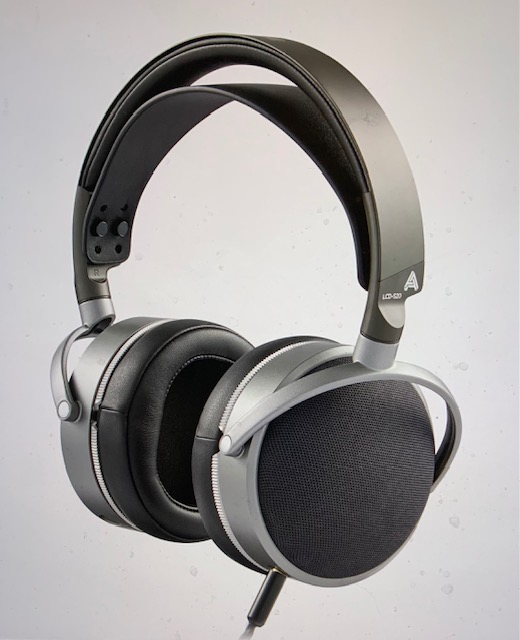
The construction of the Audeze LCD-S20 headphones stands out for its distinctly professional and industrial design, based on a robust chassis that combines aluminum forks, magnesium parts, steel spring arches, and glass-reinforced nylon components. They feature closed-back ear cups with internal acoustic damping and 90-mm planar magnetic transducers, complemented by a headband with a suspension strap that distributes pressure and incorporates a magnetic system for easily swapping out the gel-filled ear pads.
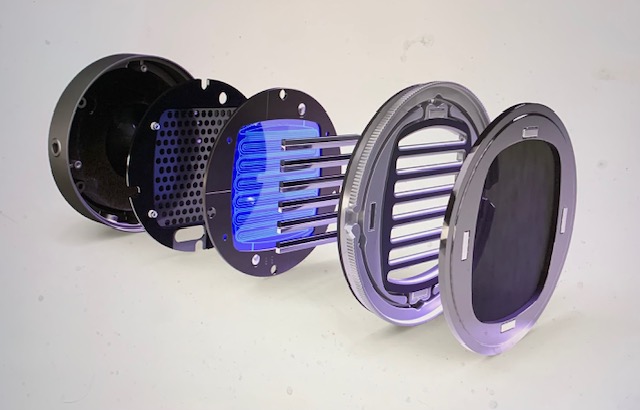
Audeze’s patented SLAM™ (Symmetric Linear Acoustic Modulator) technology integrates precision-engineered channels into the coupling ring between the ear cups and its 90 mm planar-magnetic transducers to manage internal air pressures, tuning the low frequencies to deliver an extremely impactful, deep, and distortion-free bass response.
By balancing airflow dynamics in a closed-back design, SLAM dramatically improves instrumental separation and delivers outstanding stereo imaging. Among its pros are the exceptional durability of its metal components, excellent passive isolation (ideal for studio recording without sound leakage), ease of maintenance thanks to its replaceable components, and the great functional versatility of its interchangeable cable input, which allows it to be connected to either ear cup.
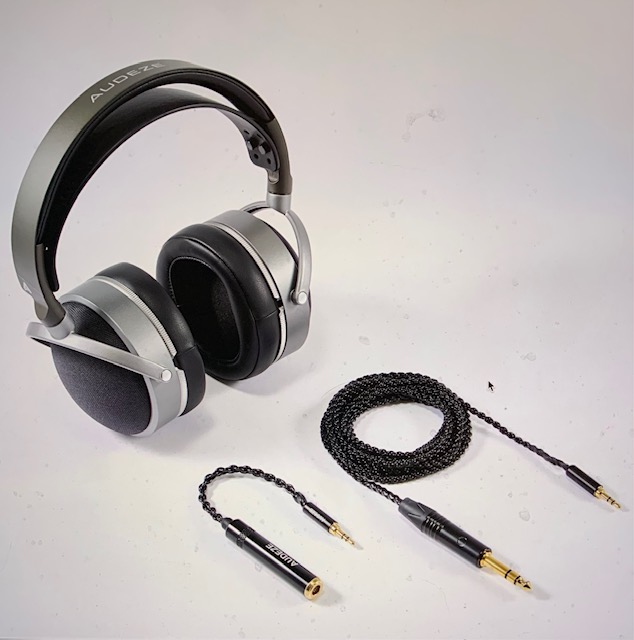


On the downside, the closed-back design and planar driver system bring the total weight up to 550 grams, making them a fairly heavy model that can cause some fatigue due to weight or pressure after very long sessions. Additionally, the headphones aren’t foldable, and no hard case or carrying pouch is included, which makes them less practical for taking them outside a fixed location. In other words, forget about using them in different recording studios or for field recordings. In this regard, Audeze cut corners where it shouldn’t have.
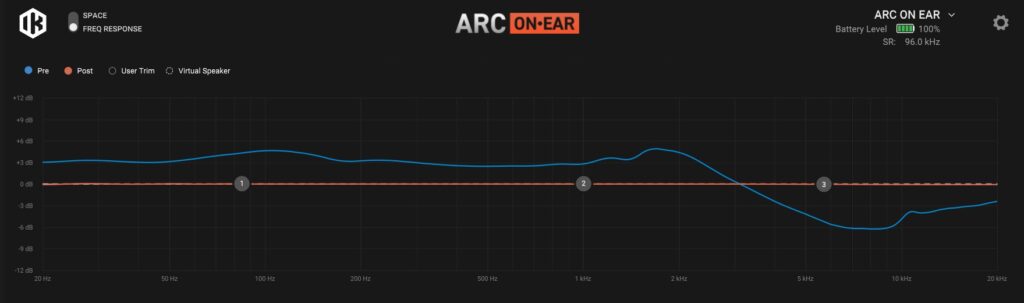
The Audeze LCD-S20 has a dark sound profile. The bass is deep, fast, and punchy, without interfering with the midrange thanks to SLAM™-controlled airflow, maintaining impact without distortion. The mids are clean, direct, and natural, with a wide, three-dimensional stereo image. In the treble, the response is somewhat subdued, characterized by an intentional roll-off at the highest frequencies; this gradual roll-off softens harshness and sibilance, ensuring fatigue-free listening (check the blue line at the graphic below).
One misleading feature is their low impedance (18 Ω), which, according to Audeze, allows them to be used with laptops and portable players. When I first started using them, I realized I needed to adjust the monitoring output on my audio interface to nearly the same level as my 250 Ω Beyerdynamic DT 770 Pro or DT 1990 Pro headphones. Here’s why: to determine a headphone’s volume performance, you need to consider both impedance and sensitivity. The Audeze LCD-S20 has relatively low sensitivity (93 dB/1 mW), while the 250 Ω Beyerdynamic DT 770 Pro and DT 1990 Pro have 96 dB/1 mW.
For a headphone to be “easy to drive,” it requires low impedance (electrical resistance) and high sensitivity (efficiency in converting milliwatts into actual volume). Even if you can achieve a high volume with a portable player, the headphones will lack dynamic headroom: the bass loses impact, and the stereo soundstage becomes narrower. In other words, they fall short in dynamic performance if they don’t receive enough current. Since the LCD-S20 are planar and have low sensitivity, they require a lot of electrical current (milliamps). In conclusion, these headphones require a dedicated amplifier or a high-quality audio interface to deliver the sound they’re capable of.
There’s something audiophiles need to understand about recording studios: 1) despite the risk of listener fatigue, we prefer to listen with full detail in the midrange and high frequencies because we protect ourselves from listener fatigue by taking silent breaks, and 2) both hardware and software are work tools where it’s far more important for the user to understand their sound and limitations in detail than their quality, and that there are specific tools for specific tasks.
And that’s why there are many cases where, in numerous studios, you’ll find equipment that has become an industry standard, such as the Sony MDR 7506 headphones for tracking and the 250 Ω Beyerdynamic 1990 Pro headphones for mixing. In my recording studio, I always make the tracking using headphones. For this task, my go-to headphones are the Sony MDR 7506, which are a standard in tracking monitoring because their boost in the 2–10 kHz range acts like a magnifying glass for imperfections, bringing unwanted noise to light: lip smacks, harsh sibilance (annoying “S” sounds), background noise, out-of-tune notes, or editing clicks. Considering that the Audeze LCD-S20 has a dark sound profile—the opposite of the Sony MDR 7506—I don’t recommend them for studio tracking.
In large recording studios, tracking headphones have always followed two simple rules, regardless of their sound: 1) they must be quickly and easily adjustable for any user, and 2) the cable enters the left earcup. Given the difficulty in adjusting the Audeze LCD-S20, they are intended for use in small recording studios where the interchangeable cable input is a useful feature.
The width of the stereo image in closed-back headphones is determined primarily by the internal acoustics of the ear cup, the orientation and size of the transducer, and the frequency response tuning. Because this is a sealed design that traps air and reflects sound waves within the chamber, the width depends on the headphone’s ability to manage internal sound pressure and control resonance. The angled placement of the drivers mimics the natural arrival of sound at the outer ear, while damping technologies and fine-tuned equalization in the treble and upper-midrange create the spatial illusion of separation and stereo imaging. In this regard, the Audeze headphones are unrivaled in my studio.
I don’t like to mix using headphones, but I always check my mixes with my Beyerdynamic 770 Pro and DT 1990 Pro—both 250 Ω models—to review the details, especially positioning within the stereo image, and keeping in mind that many people listen to music using headphones. For years now, it’s been common to use headphone calibration systems to flatten their frequency response curve, especially when using headphones for mixing. The most popular ones are Sonarworks SoundID Reference (software-based) and IK Multimedia ARC ON-EAR (hardware + software).
I use the latter because its hardware allows me to work with zero latency. The ARC ON-EAR correction enhances the Audeze LCD-S20 to such a high standard that they have replaced the 770 Pro in my closed-back headphone mix checks. In the graph, shown above, the blue curve shows the frequency response of the Audeze LCD-S20, and the orange line shows the response corrected by the ARC ON-EAR system.
Conclusion: The Audeze LCD-S20 studio headphones have a sturdy construction, great passive isolation, and an excellent stereo image, which are three very useful characteristics in recording studios. Regarding the sound profile, they are only useful in a recording studio if used with a headphone calibration system that works well with them, such as the IK Multimedia ARC ON-EAR.
Price: $499.00
More info at https://www.audeze.com/products/lcd-s20