
By: Rick Landers
Guitar International and the masterful singer-songwriter, producer, author and music historian-presenter, Rod MacDonald, continue our conversation about Rod’s music career, including challenges, songwriting, memorable performances, the quiet times of creating, and the situational flexibility to change on a dime to address audience dynamics.
If you missed the beginning of our conversation, please go to PART 1 HERE! and PART 2 HERE!
“A keen sense of humor, an ingratiating way with romantic songs, and just enough recklessness to keep an audience wondering.”
Buffalo Daily News
“Rod MacDonald is a brilliant folk singer and composer. His melodic songs possess words that go straight into your heart and soul.” Atlantic City
(NJ) Press
“One of the most highly regarded singer-songwriters working in North America today”
Fast Folk Musical Magazine
CHECK OUT ROD’S 2026 CALENDAR!
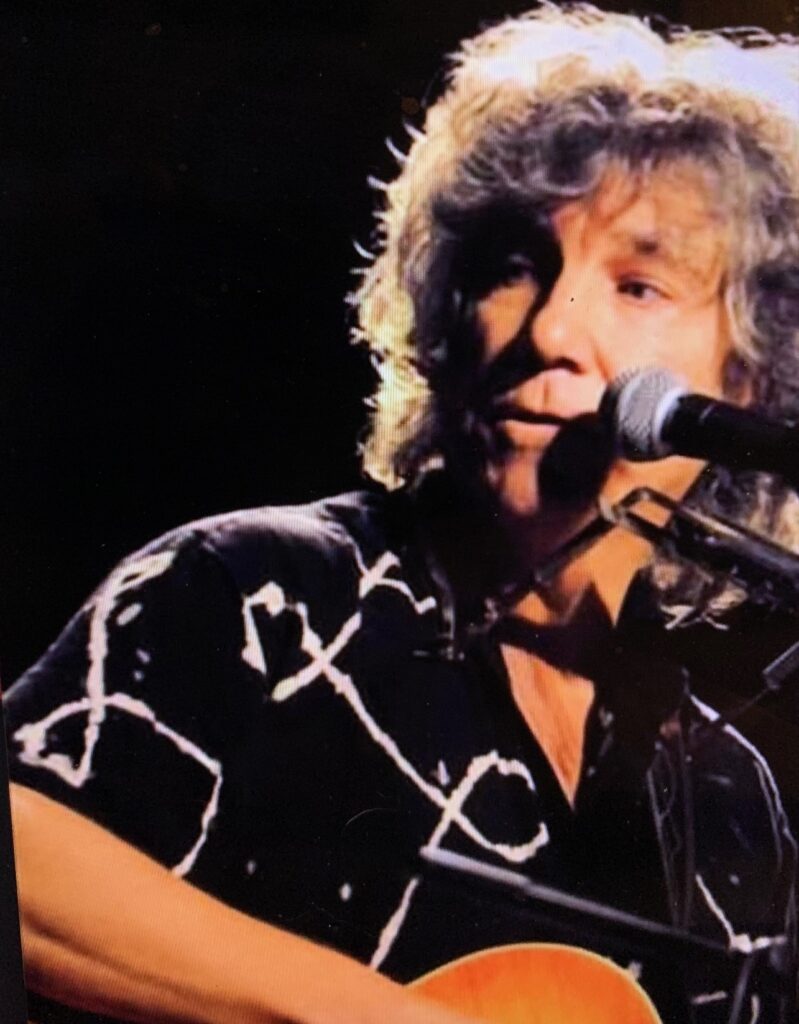
Rod MacDonald
Rick: It seems to me that based on what you’ve accomplished, it takes a certain amount of discipline and some resilience not only to start a project, which is always kind of fun, but getting to the finish line, as it seems to be the last 5% of a project that’s the hardest part of most projects. It sounds like you’re a finisher, you like to get things done and you crunch through that last 5% and get it right.
Rod MacDonald: I do like to get things done. I’ll even do things that I know I’m not going use just to finish them and then put ’em aside and say, “Well, okay, but at least this is done if I ever want to come back to it.”
That’s definitely part of my personality, no doubt about it. I like to finish things and I like to finish them to the degree that I think that they’re where they belong, that they’re as good as they can be. I don’t like to leave things unfinished very much, unless I feel like every once in a while you come to a place where you think, “Well, I don’t think this is going to get any better no matter what I do, but I still don’t think it’s good enough to release.”
Andt then you have to let go of it. The song will occasionally end up that way. And then sometimes I’ll put it on my website as an archival recording later on and say, “Because it’s the only recording of this song. And every once in a while somebody will write me a letter or an email or say, “Hey, have you ever recorded such and such a song? I heard you do it at a gig and I loved it and I’d love to get a copy of it.” And then that’s what I’ll send them, that kind of thing.
But, yes, I am definitely a finisher.
Mark Dann and I work very well together. I’d have to give Mark a lot of credit as leading me through a lot of the processes of recording and finishing work, but I’m finicky about the details. I’ll send a mix back and have him correct it just because I hear something going in the background at some point in the mix, I’ll make run, another one without that in it, that kind of thing. I’m very finicky about details, but I do finished work.
Rick: When you’re writing your songs, writing your books, and when you develop your workshop presentations, that’s kind of a loner type of a world. And then you go out and you perform, which is more of an extrovert situation. How would you define yourself?
Rod MacDonald: I’m a little bit of both. I don’t think I’m naturally an ebullient person. I’ve come across artists who say,”The stage is my home.” I definitely don’t feel that way. I have to get up on stage and work my way through it.
I even had a woman once offered to pay for me to take lessons and how to smile more on stage. And I asked a friend of mine who’s in theater who teaches acting to teach me how to smile more on stage. And he’s a guy that’s come to a lot of my shows and he thought about it for a second and he said, “No, I won’t do it.”
“I said, really? Why not?” And he said, “Because, one of the things I like about watching you perform is watching you wrestle with it. And I don’t want to teach you how to be slick. I don’t want to see you be slick.”
And so I guess that’s a good analysis of the fact that I do have to wrestle with it a little bit. Years ago, back in the 1990s, I was traveling in the Midwest and I was holed up for a couple of days between shows and this woman who was affiliated with the club that I was there to play, very nice lady, asked me if I would like her to read my horoscope chart.
I said, “Well, I dunno, that’s kind of a personal thing.” And she said, “I’m really quite good at it and I rely on real material, real fixed material. I don’t just make it up. So, we had an afternoon hanging around, we were drinking coffee, and I said, “Okay, go for it.”
And one of the things that she said to me, I’m not sure if I have this exactly right, was that because I’m a Leo as a sun sign, but my moon sign or my birth sign rising sign, one of those is in Saturn. She said that I’m an unusual combination of a person who has both the ability to jump to the forefront of a situation and really be a leader of it, or alternately sit at the back of the room and very quietly observe everybody else. She said, there are very few people who have this dual ability, but you do. I absolutely understood what she meant right off the top. I had no problem. I didn’t at all go “Really? I never thought of that.”
I had never thought of it consciously, but I instinctively knew that it was true. I do have those two abilities. I often get put in leadership situations. In fact, almost every situation I’ve ever been involved in, people have put me in a leadership position without my even asking them to.
And then I sort of direct traffic. I think that one of the reasons that I’m good at it is that I don’t do it from a very egotistical point of view. I don’t sit there and go like, “Oh, I’m so important or anything like that. I kind of do it from a very pragmatic point of view, where I try to get the best out of everybody involved and let everybody do what they want to do and somehow make it make sense.
I’ve been the band leader of almost every band I’ve ever been in, even though I’m almost never the best musician in the band. In fact, I don’t even want to be the best musician in the band. I like to surround myself with better musicians than myself and then kind of direct traffic and get everybody to maximize what they do, without them having to think about telling everybody else what to do. So that is one reason why I think I’ve worked well with other musicians, probably a personality thing.
And then at the same time, I do have the ability to sit at the back of the room and listen and just kind of take it all in. And maybe this has allowed me to be a bit of a producer of my own recordings, but also of other people. I’ve produced a few recordings for people. I’ve directed a little bit of traffic. Sometimes people have invited me to their sessions and they’ll ask me what I think and I’ll diplomatically tell them and they’ll sometimes even do what I suggest. So I think that’s true. That’s something I can do both ways. So, I do find that the introspective part of it can be very rewarding.
When I feel really tuned into the writing, which isn’t always but does happen, and that’s when I write, is when I feel connected to it. And it’s an irregular thing. It’s something I can cultivate, but it’s also something that just kind of springs on me sometimes when I feel connected to the writing. It feels great when you have something that comes through and you are able to get it down in such a way that you feel makes sense. I really love that feeling. And it’s a solitary thing, absolutely.
It’s just you and the bull and you end up working your way through it. And sometimes it can be draining. I’ve burst into tears, fortunately, nobody else is around to see me feel like I’m embarrassing myself when that happens. But I’ve had that feeling in the writing process, and then you have to kind of try to take that out to the public.
The funny thing is that I didn’t understand that dynamic when I was young. I think I actually learned it from the process, specifically. This isn’t the only time it’s happened. When I was younger, I used to write songs that I think I thought people would like; happy, upbeat, kind of funny type stuff. And people liked them, okay, but they weren’t the songs that they were blown away by. They weren’t the memorable songs for people.
When I wrote “Cross Country Waltz”, which is one of my earliest songs on the White Buffalo album, and when I wrote American Jerusalem in 1978 or so, I played it for a songwriting workshop that I was going to with my peers in the Village. And everybody listened to it, and nobody said a word after I played it. Nobody said a word to me except my roommate, Tom Inandi, who was a former English teacher in high school who had become a singer-songwriter in the Village. And he was my roommate. And he was a great influence to be around because he didn’t really write words himself, but he really understood lyric writing on a listener level. And he looked at me after that song and he said, “I’m going to learn that.

And then Shawn Colvin said, “Can you teach me that song?” She learned it away right after I wrote it. Didn’t record it until 2015 or something, but she learned it right away and sang it all these years. And then I was playing a gig at Folk City one night and I was opening for somebody and I was playing some, what I thought the audience favorites were supposed to be.
Lucy Lansky, who’s a pretty good singer and writer herself, was the bartender. And she yelled from behind the bar, “Aren’t you going to play American Jerusalem?” And then everybody in the crowd who’d never heard the song kind of went, “What’s that?” And so I played it, and of course, it’s six minutes long and it’s very quiet, it’s very personal, and they really loved it. And everybody started asking me to play this song.
And somewhere in that process I realized that it’s okay to really externalize your inner self in song, that that’s to a great extent, what people actually most want from you.
So, if you can get to that place where you’re really kind of expressing your most inner feelings about things, and that’s what people are mostly going to remember, most of those songs come about spontaneously. They might get triggered by hearing a phrase or thinking, “I’d like to address this kind of situation,” or whatever it is. But most of those songs as songwriters often say, they kind of write themselves. It’s like they’re passing by and they choose you to download. And that’s often the most memorable songs in your repertoire. I think for most songwriters,
Rick: Well, maybe they resonate because they align more closely with your core values.
Rod MacDonald: And maybe they also resonate because that’s probably true, even if you’re expressing them poetically. And I think also it’s probably true that when people see you sing those songs, they think that’s the real you. Oh, this is the real guy here.
Rick: True.
Rod MacDonald: This isn’t the guy who’s put on some happy mask. For my sake, this is the real guy. And people are drawn to that. I mean, we all loved The Beatles, and John Lennon said he never wrote a song that meant a thing to him until “In My Life”, which is what, their fourth or fifth album. So there is a place in music, especially popular music for well constructed songs, you might say. But I think that at the end of the day, what people really want is the real deal, and that’s you, something that you have to work at, but it’s kind of a gift when it comes to you.
Rick: Yeah. So do you have a favorite setting where you maybe prefer to perform? Concerts, small venues, festivals, and do you have any favorite or humorous performance moments?
Rod MacDonald: Oh, geeze. Well, everybody who’s done as many gigs as I have has humorous performance moments. But I don’t know. I like a lot of it. When I moved to Florida was playing in bars. I’d never done much of that when I was living in the village. I never really liked it because I didn’t like subjecting my own songs to the noise.
But I found that playing in the Irish Trio in West Palm Beach on weekends, for years, that I became a much better musician. And I got a lot of satisfaction out of that. And in fact, a friend of mine who’s maybe my oldest real good musician friend came down and visited me during that time. He’s in the traditional music world, he’s a mandolinist. And he sat in with us and he said, “You’re really getting better. This is a good thing for you to be doing. You’re going to become a much better guitar player from doing this on a regular basis.”
So I like that. I like anything that I feel is a fun experience and I of course love any fun experience when the audience really responds and gets it, that’s great. And they get it a lot of the time in almost any real listening situation. I think audiences like my songwriting and singing, and I play a fair amount of gigs where they’re unfamiliar with me because frankly, I’ve not been marketed by anybody.
So, I can show up in a city somewhere in another part of the country that I’ve never been before. And the audience that’s there is largely going to be, you might say, speculative. They’re going to be there because the promoter of the gig told them, “Hey, this guy’s really good. You should check him out.” Or there’s an article in the newspaper, or they heard one song on the local folk radio station and they’re deciding, “Okay, I like that song. I’ll go see this guy. I like this series. I am a regular member of this series, so I guess I’ll go see this guy.”
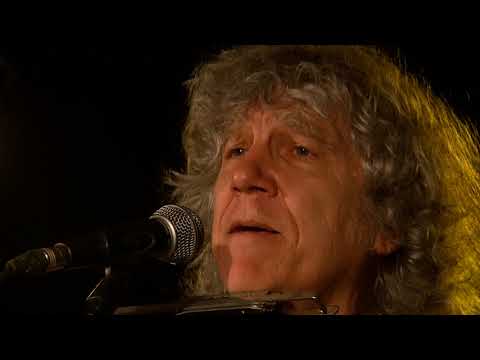
I play a fair amount of shows like that, and they’re usually very good. I think that I do well with those audiences. I like those kind of shows. I like the challenge. And then there are some places that I play. I play The People’s Voice Cafe in New York City every February. And the Turning Point in Piermont, I do that almost every year. And in fact, I’ve done the People’s Voice Cafe now for 15 years in a row. Really the same weekend every year. And a lot of those people that come are my long, loyal, longtime fans, and they could tell you or probably request songs that I do that I haven’t played in years.
And I’ll try to accommodate one or two of those requests. I like to challenge myself almost every show. I do one song that I haven’t played in a while, that I haven’t played for an audience so that each audience gets something special and unique out of me.
I love festivals. I just played Falcon Ridge this past summer, and that was really great. That was fun. I was on the main stage twice. One of the times was solo, and one of the times was with Joe Jenks and Pete and Maura Kennedy, and those were really fun. I do some Dylan Fests where everybody plays Bob Dylan songs. I’ve done a lot of those with Pete and Maura. Those are really fun. I suppose my least favorite gig is places where people really aren’t there for the music. They’re just okay. I mean, you do your best with those, but they’re not as much fun as playing for a crowd that’s really there to hear your music.
Rick: Like listening rooms are pretty good.
Rod MacDonald: Okay, let me off the top of my head, let me see if I can free associate some memorable, bizarre situations.
I played in Zagreb, Croatia, twice, once in about 1997 and once in 2024 for the same promoter both times. And the first time we went there, the first gig was in a gymnasium that would’ve easily held 5,000 people. And we were on the stage at one end of it and about a hundred feet away, collected in the middle of the basketball floor were about a hundred chairs where people were sitting when we started to play.
I could not make a thing out on stage. I mean, we had monitors, but the volume that it took to project out to the audience and the emptiness of the room created so much echo that it was like that psych experiment where they put your headphones on you and then delay your voice while you talk until you can’t talk anymore , because you just can’t separate the reflection from the real thing. And it was so weird. And we played one song and we finished the song and it was just total soup on stage. We played one song and the entire audience stood up and started cheering and clapping, and we kind of looked at each other and went, “I guess it sounds okay to them.”
So we just slugged our way through it, and they absolutely loved it. They thought it was a brilliant concert. So there’s an example of where you really have to know what you’re doing on stage. You have to be able to execute your music even when the situation that you’re listening to is just awful.
Then the very next night, we played a huge dance club for about a thousand people, and there were actually a thousand people in the club. And the speakers, they had these subwoofers under the stage because they were blasting disco music in between. And every note that Mark hit on the bass made my teeth rattle. I mean, it was unbelievably loud on stage, and I couldn’t function, and we didn’t get to do a soundcheck. They put us up in front of a thousand people with no soundcheck. So I plugged in my guitar and he plugged in his bass, and the next thing I know, it’s like, “Oh God, this is painful.” And the sound man doesn’t speak any English. So I’m pointing at the bass and to the floor. And he thinks I’m meaning, turn it up, turn up what’s underneath me. And I’m going like, “No, please turn it down, turn it down.”
And finally somebody went over to the guy and I guess understood English and said to him, “He means turn the bass down.”
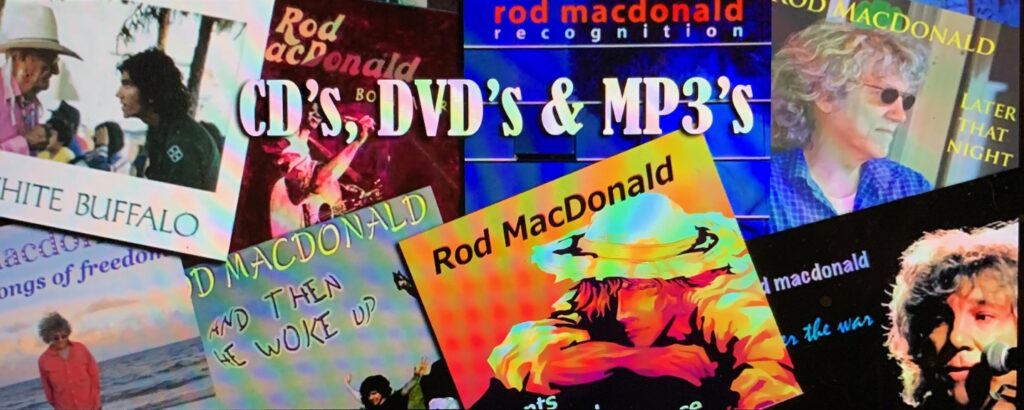
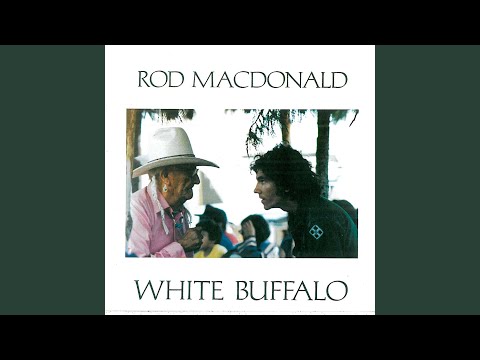
And we finally got it down to where it was possible to stand on stage and play. And so we started off with a song of mine called “The Aliens Came in Business Suits”, which is from White Buffalo back in 1986 or so. And it’s the very first song that I wrote that was a spoken word piece, but it’s a real guitar extravaganza. There’s a lot of instrumental work in it.
And they were yelling and dancing and jumping around like crazy, all right in front of the stage, like a big rock arena type show. And we’re cranked up and we’re just acoustic guitar and bass. And we got through it and they went nuts. And so I turned to Mark and I said, “We’re just going to play all of my loudest and fastest songs here. That’s what we’re going to do.” And so that’s what we did, and we ended up having a pretty fun time with the crowd loving it and stuff. But I mean, you have to be able to react to the moment sometimes, particularly because we’re not one of those acts that arrives in a bus with our own sound crew. We’re getting up and playing.
You have to be able to tell the sound guys what you need, and you have to know what that is in each situation. And then on the same tour in rural Italy, at one of those places that’s like on a farm somewhere where they make all their own salami and wine and bread and cheese, and they’re hoping that people from the town will drive out.
And so we are in this restaurant with about 20 people in the audience and the sound system and a kind of a vacuum cleaner. It’s like this hose that you put in front of you and you sing into, and it sounds like you have to force your vocal into this tunnel. And then it comes out the other end of this device that’s sitting next to you on the stage going so loud that it’s drowning out everything you’re doing.
And I looked at the guy that was, and he was very proud of his P.A. I said, “We can’t use that.” And he goes, “What do you mean? And I got him to shut the thing off, and we just sang and played. Fortunately, I can play and sing loud enough into a small room, they can hear it. So we just did the concert with no sound at all. So again, it’s a situation where you have to be prepared. I remember talking about this recently, I was playing Easter Sunday at Folk City with a five piece band.
My piano player, a guy named Bernie Shanahan, who was a very good rock and roll piano player and a good guy…was kind of religious, Catholic. And we were playing on Easter Sunday, and he wanted to watch Jesus of Nazareth, which was being broadcast as a special on some TV network. So we watched Jesus of Nazareth before going over to do the gig, and then we got there and he said, “We shouldn’t do this show.” I said, “Why is that?” And he said, “It’s sacrilegious to be playing our music on a night after watching something like that.” I said, “There’s nothing sacrilegious about our show.”
Well, we did have one song called “All of the Same Old Saviors” that was kind of a not very religious type song. And so we got up on stage and I was playing electric guitar and Folk City in those days had a pretty primitive P.A., probably had the same P.A. he’d had for 25 years. And we started into the first song and the sound man flipped the ground switch like 30 seconds into the first song and sent a bolt of lightning through the microphone into my nose!
Knocked me flat backwards into the drum set, knocked over the drums, and of course the music came to a grinding stop and the audience was horrified. Well, we had done a soundcheck, and then he flipped the ground switch during the first actual song. So we got back up and Bernie looks at me and he goes, “I told you, I told you.”
And then the sound man waves at me. And he goes, “It’s okay. I got it fixed. But I did the rest of that night, really keeping my distance from the microphone, which of course is pretty tough to do because you’re singing in front of a band and it’s loud on stage. I mean, there are those things, and then there are other things. Sometimes stuff happens that’s just, I don’t know, kind of crazy. And sometimes it’s a happy accident when something happens.
I was playing one time at the Florida Folk Festival. There’s this pavilion down by the Suwanee River that’s kind of a legendary venue run by a longtime guy who’s no longer with us. And they didn’t use a P.A. It was like a gazebo on the river, and there’d be 50 people there and you’d just sing to ’em.
And there was a Chinese couple and they had their little daughter with them. And she was very young, very, very pretty little girl, two, three years old, whatever it was. And I started singing a song called “I’m Your Dad,” that I wrote for my daughter when she was first born. And this little girl wearing this really pretty little blue dress, started dancing around in front of me, holding her arms up to the sky. She was creating wings for herself and just dancing around in a circle. And she danced around in front of me for the whole song. And the audience was just spellbound, me included. I mean, could barely, it was so beautiful. I almost forgot where I was several times in the song. And it was just a really beautiful moment. And then when it was over, she went back and sat with her parents for the rest of the set, and I just went on.
Afterwards everybody came up to me and said, “Oh God, that was so incredible!” And it really was, was just a beautiful thing. But then on the other hand, here’s another one. When my rock and roll band was playing in Hartford back in the late Seventies, we used to play a song called, “I Don’t Believe You Don’t Want To Dance”. I never released it commercially, but it’s actually on this USB drive that I just released this past year. It’s an older song and it’s a very uptempo song, a real dance number. And there was a dance floor at the club that we were playing, and people got up and danced a lot if we played anything that was fun to dance to.
And so we started playing that song, and I think it was the end of the night. It was the very last song of the night. And we started playing that song. There was this guy who was kind of short and there was this very tall six foot blonde woman, very slender, very pretty, and for some reason they ended up on the dance floor together. I don’t know if they were a couple. And he started dancing really vigorously trying to get her attention.
And she just looked at him like, who are you? And he didn’t quit. He did this for the entire song. He danced, rings around her, he just chugged around her in this circle. And then everybody else on the dance floor backed off and started clapping and watching him. And this guy put on this amazing show dancing in a circle around this girl who clearly didn’t want anything to do with him, but didn’t know what to do. And she was kind of looking out across the crowd for one of her friends to come bail her out. And wherever her friends were, they were probably clapping along for this too and maybe didn’t realize, but we could see from the stage that she was really not very comfortable with this. We kept playing this song, and one of the members of my band was a woman, Peggy Atwood, and she kind of looked at me, raised her eyebrows, “Are you going to wrap this song up to this Poor girl Can get away?” But the song had a real fixed arrangement, and there was a lengthy guitar solo that was part of the arrangement, and we weren’t going to tell the guitar player that he couldn’t play his solo. So we played the entire song, and this went on for five full minutes of this guy dancing in rings around this girl. And finally we ended this song and the lights came on, I think while we were still playing the song, which the restaurant had a very strict policy when the lights came on, stop playing, get it over with. So we were done and the girl walked away and just turned her back on the guy, and everybody walked away and everybody kind of applauded for the guy what he’d just done. He’d really done this amazing dance.
Was like a meeting dance. I couldn’t describe it any other way, but it obviously didn’t work. And then in that same club on another night, we were playing, I think in about 19, the spring of 1980, and it was right after the Iranian hostages had been released,
And somebody walked up to me while we were on stage and said, “Do you know that there’s one of the Iranian hostages is in the audience? And I said, “No kidding. Ask him if he’d like to come up and say a few words. And we played another song and the guy came back up to me and he said, “Yeah” that he would be glad to do that. So I said, “Okay”.
Well, we got a couple more songs to do this set and then I’ll invite him up. So we did. And then I said, and the audience, it was a big dance club, and so there were people drinking and partying, and it wasn’t like a quiet crowd, but it was a responsive crowd. They would clap and cheer at the end of songs, a noisy crowd. I walked up to the mic and I said, we have one of the hostages recently back from Iran here tonight, and it was the most amazing transformation. Everybody jumped to their feet and started cheering and clapping. Up until that moment, I wouldn’t have believed that everybody was paying that much attention to anything I said.
But they jumped to their feet and started cheering and clapping immediately, like everybody in the place all the way to the far end of the room had heard what I said. I thought, “Holy smoke!” And then they clapped and the guy walked up through the crowd and he got up on the crowd to the microphone and we stepped back, and I guess I stayed on stage. I didn’t want to abandon him up there. Well, I figured what I would do would be when he was done that there’d be a big round of applause, and we’d say, “We’re going to take a break. We’ll be right back.” We stayed on stage and he said to the crowd, “Thank you for that welcome.” And then he paused for a moment and he said, “I have to tell you that for quite some time, we thought that people had completely forgotten about us. And the mood in the room suddenly turned unbelievably ugly. I looked out at the crowd and I thought they were going to walk up on stage and beat us all to a pulp. Really, you could see the anger rising in people. And I thought, “Oh my God.”
I remember the lead guitar player Bill turning to me with his eyes wide, we got to get out of here. And then the guy said, “But you’ve just shown me that that wasn’t true. Thank you so very much.”
And he walked off the stage and then there was this kind of half-hearted applause, but everybody chilled. And I said, “Okay, thanks everybody. We’ll be right back.” And we got the hell out of there as fast as we could. And you learn a basic lesson from that, that if you do that, you better be prepared for whatever reaction you might get.
I mean, those are some of the magic moments I’ve been thinking lately about a song of mine called,”The Minstrel Boy” that I want to record that I’ve wrote 30 or 40 years ago and recorded a couple of times, but never released.
And it has a line in there. “You sat out on the highway looking for a living, trying to remember the people are listening with an ear or two though they may sleep through your finest lines. You walk along the shore, you sleep out in the dirt, you used to know the score, but now you’re really searching to one night they’re quiet and you feel it all light up before your eyes. It makes the man a minstrel boy.”
And I was trying to remember the first time that really happened. I think that it was probably me at Folk City in the 1970s that I had really been yearning to really get over to an audience that I was really motivated to play and sing my songs, but that I really kind of needed to have that happen. I know that it happened at Folk City one time I was playing.
I played two of my quietest and longest songs, “American Jerusalem” and “Sandcastles” at the end of my set back to back and got this really amazing encore from the audience, and it was like a really beautiful moment. And then I went back up on stage and played another song and everybody really loved it. And I just thought, “Wow, it was really magical. But I was the opening act and the headlining act, instead of taking a break, rushed up on stage and said to the crowd, “Thank you for staying through all of that.” What? A couple people booed her.
Rick: Wow.
Rod MacDonald: A couple people booed her for her lack of grace. It was kind of weird.
Rick: Yeah, it was weird. Jealous. Sounds like it’s jealousy,
Rod MacDonald: Insecurity, insecurity.
Rick: Your competition.
Rod MacDonald: You can’t think of opening acts that way. I’ve opened for a lot of people and the best of them always walk up and say something nice about you, even if you didn’t have that great a set. They’re just smart enough to say that and move on. I remember opening for Tom Rush and having a really great set once and getting an encore, and he walked up on stage and he goes, “How about that Rod McDonald?” That’s all he did. Everybody gets to clap a little more. And he goes “Okay! And then he goes into his thing and I thought, “Class act.” Exactly the way you want it handled. Really nice man and a gracious person. It’s part of his DNA and that’s a good thing.
I mean that’s something actually that I strive to emulate when you witness something like that, you think I want to be like that. I have guys open for me all the time too, guys and women in groups and whoever, and you always want to say something nice about ’em.
Rick: Yeah, it’s honorable to do that as well, I think.
Rod MacDonald: It’s honorable, but it’s also that everybody who gets up on stage is putting themselves on the line. It takes a certain amount of courage, even if you’re naive, even if you’re blind, even if you’re a maniac, it still takes a certain amount of courage to get up there and do that.
But anyway, when I sang those two really quiet songs and realized the most personal stuff sometimes is the most magical thing, and the people just lit up before my eyes. It’s what happens. And that’s kind of what you want to have. And as you get better and better, that happens more and more as you get more, I mean, I started out without a lot of experience doing this. Some people start playing when they’re 12 years old, but I did not, I never really faced an audience with a guitar in my hands till I was in my twenties. So, I had to really kind of figure it out.
BONUS VIDEO!



vorbelutr ioperbir (3 months ago)
Your style is so unique compared to many other people. Thank you for publishing when you have the opportunity,Guess I will just make this bookmarked.
Guitar International Magazine (3 months ago)
Thank you, I appreciate your comment. Rick