By: Rick Landers
PART 1

Rod MacDonald
A masterful and prolific singer-songwriter, author, workshop lecturer, and noted music history presenter, Rod MacDonald, is one of the most creative, hard working and entertaining entrepreneur you’re likely to meet. His songs are catchy, whether they are light-hearted or heartfelt with sincere intent, informing us and melodically nudging us to be better, choose smarter and contribute more to society.
As he pursued a career in the U.S. Navy, he honored and reflected his core values, becoming a conscious objector to become a creator and singer of folk music.
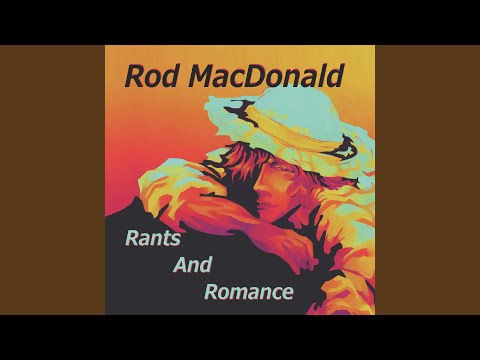
In our interview we covered his songwriting, collaborations with others, and his perspectives on what it means to be a musician. With several fine albums in his quiver, he offered up how he pulled together his most recent release, Rants and Romance (2023), with Rod on both acoustic and electric guitars, harmonica, mandolin and vocals. And, from his early days performing and recording, he’s made his mark with a song that decades later still resonates and captures us still, “American Jerusalem”
When asked about his life decisions, Rod replied:
“Well, I suppose the biggest ones were to follow my dream and move to Greenwich Village and try to find a place in the arena of the music that I had loved, that I loved so much. And that paid off in a lot of ways. One of which was that in Greenwich Village, you weren’t asked to play cover music. You were asked to play your own songs.”
Rod’s decision followed his vision as he eventually served as a co-producer of the Greenwich. Village Folk Festival (1987 – 1994), with Ray Micek, Jay Rosen and Gerry Hinson. And today, the festival has gone virtual, featuring the best of folk musicians, as well as paying tribute to past generations of traditional music. In 2025, the festival paid tribute to the legendary folkie, Phil Ochs.
MacDonald’s been performing since the 1970’s and has 14 albums to his name, as well as 21 of his songs honored by being accepted into the Smithsonian museum’s Folkways Collection. Since 2006, Rod has served a Music Americana lecturer with the Osher Lifelong Learning Institute (OLLI) – Florida Atlantic University. In 2012, Rod was named Distinguished Faculty Member.
McDonald’s music career has taken him around the world and on stage with such icons as: Pete Seeger, Peter Yarrow, Odetta, Tom Paxton, the Violent Femmes, Suzanne Vega, Shawn Colvin, Dave Van Ronk, Emmylou Harris, Richie Havens, Ani DiFranco, Tom Chapin, Jack Hardy, David Massengill, Joe Jencks and more.
Rod honed his skills early, writing for Fast Folk Musical Magazine, and publishing 21 songs. And steadily gained solid performance experience at major festivals, including: Kerrville, Falcon Ridge, Summerfest Port Fairy (Australia) and Friulh (Italy).and more.
And in 2025, he scheduled three lectures, Music Americana: Protest Songs; Bob Dylan: The First Ten Years; and The Sound of Her Voice: Linda Ronstadt and Emmylou Harris.
And in keeping with his penchant for storytelling, Rod’s authored two books, The American Guerrillas and Open Mic.
Along with being one of the top musicians in today’s Americana scene, Rod’s music has been covered by others, including: Dave Van Ronk, Jonathan Edwards, Shawn Colvin, Garnet Rogers, Joe Jencks, 4 Bitchin’ Babes and Renaissance Fair artists. He also penned and presented, Songwriting for Self-Expression, at the New York Center and Common Ground on the Hill.
Guitar International is honored to include Rod MacDonald’s interview in our magazine for our valued readers and we’re certain they’ll look forward to Part 2 of our conversation with him.
******
 Rick: Let’s start with your latest album release, Rants and Romance. Are the tracks new songs that you’ve written, or are some of them songs that you wrote sometime ago and you just got around to putting on this album?
Rod MacDonald: I’ve got to think for a second about a question like that, because the weird part of it is you record 15 songs for a cd, but you probably only play four or five or six of them live very often, after 14 CDs. So, I think they’re all pretty new.
Several of ’em I wrote during the Pandemic, and it was my first CD of new songs since 2018, when it came out in 2023. So it had been, and we recorded most of it in 2022. It had been four years. I had a lot of the songs I wrote during the Pandemic. A few of them had been things that I’d worked on over time.
My work process in writing songs isn’t always that immediate. I mean, sometimes it is. Sometimes you wake up in the morning, write something down, grab your guitar and go, “Yep, this goes just like this.” But it’s not always that way. Sometimes I write words on a piece of paper or even type ’em into the computer, and then I go back and look at ’em weeks, months later. But, I think most of the songs, I think there are three covers on Ran and Romance by other people.
I think all of the songs that are my own, were pretty new at the time. Off the top of my head I’m not recalling anything that was laying around for a long time or anything like that.
Rick: I was a bit surprised to hear and I wasn’t expecting it, that you have some songs where you’re not singing, but you’re speaking. I think it’s only two tracks. I didn’t get a chance to hear the whole thing, “Cry Freedom’. That was great. I’m going, oh, that’s pretty cool. So did you find that more challenging than writing songs for singing, trying to get the cadence right, or the way you presented the words?
Rod MacDonald: I’m not sure I think that consciously about it. It’s something I also did on my 1996 cd, Then He Woke Up. There’s a couple spoken word pieces on that, two or three. I think every once in a while it just feels like the right way to go. I don’t suppose it’s that formal of a process. It’s more like, this just feels like the way to do this song. A melody would almost be worse than whatever it is.
In the case of “Cry Freedom”.it started out as a guitar piece. It was a guitar piece for a long time during the Pandemic. I’ve got my wife, Nicole, in, and at the time, two teenagers living here, and we have a small two bedroom condo.
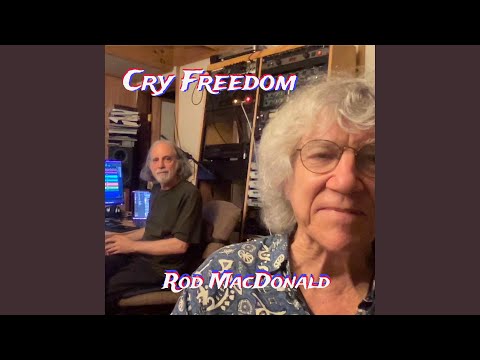
So we kind of took shifts in a way. The kids were going to school online, virtually on the computer. They both had laptops. One would be upstairs and one downstairs. But one of my kids and I started staying up very late at night, and the other started going to bed very early, at the same time as my wife. And I guess we did this, not so deliberately, but we found that doing this made it easier for me to get my work done. Otherwise we’d all four be in the same room at the same time, and you can’t see it where we are.
But in our house, my office setup, where I’m sitting right now, is actually part of the living room. And so if we were all sitting around together, I don’t like to work on music when everybody’s hanging around me. I like to have some solitude.
I started sitting on the couch late at night with a cheap electric guitar that I have that I love to play with my fingers and just not plugging it in. And I started playing that piece of music. And then I had that whole guitar arrangement. I had the whole piece of music all worked out musically before I ever wrote any words to it.
And then I started thinking, “Well, what is this? What am I doing with this?” It was just a kind of guitar doodle for a long time. But then at some point, I wrote the poem of “Cry Freedom” without even thinking about music, really, just as a poem.
I do occasionally do that. And then at some point I just had the words in front of me and the guitar doodle going on at the same time, and I started thinking, “Can I do this?”And it fit, it worked out, and then I had to learn. The difficult part of it was learning the spacing of the words.
Despite being a spoken word piece, it’s very precise in terms of timing, how you phrase it, at least it seems to me that way. And so I had to learn it that way. And then once I got it, the next time I was up in Woodstock at Mark Dann’s place, I recorded the song with him, and it was the first thing we released from Rants and Romance. We put it out as a single several months beforehand.
I don’t know, I guess that’s sort of the process. I don’t have a formal process for writing all that much. I kind of do whatever works and that worked for that song.

Rod MacDonald
Rick: So, if you find that normal, you would come up with a melody, play with some chords, then you come up with the words afterwards?
Rod MacDonald: I almost have to say there is no normally, I kind of do whatever. That’s one way that I like to work. If I have a piece of music, I’ll just work on the music until it feels right.
I have several of those even now laying around with no words. And then I have words that have no music sometimes. And then sometimes when I write something, it just all feels I can hear the melody of the words when I’m writing it, and then that becomes more simple to execute, in a way. I’m trying to think if there’s a good example of that on Rant and Romance.
In the latter half of the cd, there’s a song called, “The King of Tomorrow”. When I wrote it I very much had the music in my head as I was writing the words, and then I just kind of had to learn to play it. I probably even had the guitar in my hands a lot of times. So that would be a case of where the words in the music were more, I dunno, unitary or more simultaneous in a way.
Rick: When you do that, do you come up with some words, and I know that Sting called some of his initial lyrics, “rubbish lyrics,” and I’ve called them trash lyrics.
Rod MacDonald: Dummy lyrics is a phrase that I’ve heard used.
Rick: Yeah, that’s kinder. And so do you come up with those and hen you fit in the right words and come up with a theme, and that sort of drives you to the end of this, basically a story?
Rod MacDonald: I don’t really work much with dummy lyrics. I will occasionally write music to an entire lyric and then use the music for something else, that’s not that unusual. But I don’t generally sit with my guitar and write out a melody while singing banana pancakes or anything like that. I just really work on the music first. But if I’m writing music to a lyric, then usually it’s because I already like the lyric and want to keep it.
Rick:. Paul McCartney started out “Yesterday” with the title “Scrambled Eggs”.
Rod MacDonald: Yeah. That’s a famous example of a dummy lyric. I don’t really know, but I think that part of their process was collaborative, and I believe that he brought that into the studio and played it for the other guys, and they all said, “Great piece of music, but the word’s got to get better than that”.
I saw an interview with McCartney one time. I thought it was very interesting. I think it was Conan (O’Brien) He asked him what he thought of himself as a lyricist or something like that, because McCartney among guys that are, I suppose, on my end of the songwriting spectrum, where we tend to write long and evolved songs, sometimes McCartney’s reputation as a lyric writer is middling and he looked at Conan and he said, “I’m not a great lyricist”, or something like that.
He said, I think, “if you and I were to sit here and each have an idea for a song and go out into another room and write it and then come back and meet, you would go out and write words, and I would go out and write music.” And then he said, “I think I’ve written some good words, but I’m really, I’m not a lyricist instinctively. I’m much more a musician.”
Which makes total sense to me. He’s a brilliant composer of music. He presented some great songs and some great riffing of the melody to some others, something totally different. And then he comes back to the melody and “Band on the Run” and a few other songs like, “Live and Let Die”, an awesome recording. But it’s got what, three lines of lyrics. It’s really great music, a great piece of music.
Rick: Yeah, A great legend I suppose. I love the title of Rant and Romance. wonder if you recall when and how you pulled that phrase together? I haven’t heard the phrase before, but it does sound great.
 Rod MacDonald: I don’t remember, but I remember joking around probably with Mark Dann, who’s kind of my collaborator in the studio end of a lot of this kind of stuff.
And I think there was originally a different title for the album, and I ran it by him and he said, “Nah, that doesn’t really say it.” And then I started and he said, “How would you describe this record?”
And I said, “Oh, it’s a bunch of rants, and then there’s some romance.” And then we both left and kind of went, “Well, I think that might be it.”
It’s clever at some point, I think it was during the early Pandemic, I started describing in a sort of off-hand funny manner, some of my songs as rants, and they are. “Cry Freedom” is really a rant.
But I mean, you can do a rant artistically, and I try to do that. I’m always conscious when writing a song like “Cry Freedom”, that it has to make sense in and of itself. It has to hold together as a piece of writing. You just can’t vent and expect anybody to make any sense of it for you. You have to make it clear
Rick: Artful. You make it artful to some degree, I suppose,
Rod MacDonald: To some degree. Yeah. I sometimes teach songwriting. I teach songwriting workshops.
Rick: Yeah, I took two of yours.
Rod MacDonald: That’s right, I remember. Yes. Sometimes guys write political rants, and it’s largely just two lines at a time that rhyme. And a lot of the things that they say are kind of clinched lines, like “The Emperor has no Clothes” is one of that kind of stuff. And those are almost like dummy lyrics in a way to say, “The emperor has no clothes”. Yes, of course, everybody knows what you mean, but it’s kind of a cliche and almost like a dummy lyric. You have to sort of, I think, be more artful, as you said,
Rick: Or unpredictable.
Rod MacDonald: Or unpredictable. Yeah. Yeah. That’s a little bit of that. You want to explore it. Writing a rant is Dave Van Ronk. Do you know who Dave Van Rink was?
Rick: I’ve heard of him. I don’t know much.
Rod MacDonald: Dave Van Ronk was a big influence on a lot of us in Greenwich Village for a couple generations. Dylan, Phil Ochs, on down through guys like me, and quite a few younger guys that I know now that are in their forties that started playing guitar by learning with Dave. And Dave used to say, “It’s really hard to write a good political song, but it’s really easy to write a bad one.”
And I totally get that. I believe that’s true. And so you have to make a point of, somehow at the end of the day, you got to feel like, this is really what I want to say. That you’re willing to stand there and perform it for people for however many people are out in that room.
And they may have different political persuasions than yourself or among themselves, and it has to hold together. You’ve got to be able to stand there and say, “Well, I don’t care what you say. This is how I see it.”
Rick: Yeah. Are you familiar, you mentioned Phil Ochs, and I saw him at the, I dunno if you’re familiar with the John Sinclair concert at the University of Michigan.
Rod MacDonald: You were at that?
Rick: Yeah, I was there.

Rod MacDonald
Rod MacDonald: I was in Ann Arbor this summer.
Rick: Were you? What a great town.!
Rod MacDonald: Yeah, it is a great town. A good friend of mine from my childhood, actually one of my best pals of my life lives there. And we visited him, him, and it was really fun. We walked by the spot where they did that concert, and he mentioned it to me. No, I didn’t get to go to that, but I was aware of it when it happened,
Rick: It was great. John Lennon was there with Yoko and Bob Seger, who I’d actually seen before at a small club called The Club, for like a buck, in Monroe, Michigan.
Rod MacDonald: Phil was an ideal performer for that concert.
Rick: Yeah, he was really good. And there were other people there. Alan Ginsberg was there. He did “Howl” and Black Panthers were there, was pretty interesting.
Rod MacDonald: What year was that?
Rick: 1971.
Rod MacDonald: There were three of ’em, Phil, Sonny, and Michael. Michael just passed away, I think. I’m not sure who was older between Michael and Phil, but Sonny, who’s still alive, is a good friend of mine, and she’s the oldest of them.
Rick: I saw the list with some of the other folks that are on the album and was wondering how did you decide that they were the right fit for this particular album? Was there a process? Were they buddies, or how did you actually come up with them? As far as for, Rants and Romance?
Rod MacDonald: Well, I guess there are people that I’ve worked with or are friends with, mostly for some of my CDs. Most of my work has been recorded in Woodstock, New York.
And I work with Mark Dann at his studio there. And so sometimes some of the musicians are local Woodstock guys. They’re not even necessarily people that I know very well, but I know of ’em. A couple drummers I’ve worked with were like that. Sometimes they’re guys that Mark has worked with on other sessions and thinks would be a good fit. And sometimes they’re friends on Rants and Romance…Robin Batteau, so we were hanging around and playing music for each other a lot. And I’ve always loved his playing. He’s a wonderful violinist and a really good guy.
He was going in and out of Woodstock himself, working at Mark Dann’s studio on another project. So he was around. We did a lengthy session; four or five of the songs with the violin live.
And then the drummer, Bill Meredith, I work with here in South Florida in a band called Big Brass Bed. We do mostly Bob Dylan songs. We’re kind of a sort of a side project. We’ve been working together for almost 25 years, and Mark played bass. I also used a fiddler for the two Celtic songs. I used a local fiddler player down here named Ian Wilkinson, a very, very good fiddler because I didn’t want a violinist who was going to jam through the songs. I wanted somebody who was going to play very specific parts.

Rick: Yeah. What do you use to record?
Rod MacDonald: Pro Tools. A regular Pro Tools interface. I’m not using a lot of outboard gear, trying to hype up the sound or anything. I’m leaving that to the mixing process. I pretty much record people clean. I recorded some of Bill and Meredith’s drum parts here too in my living room.
And then we fixed them up. So those are the principle guys, the electric guitar parts on “Cry Freedom”, I played myself.
We didn’t really hire a lot of outside musicians for that cd. Sometimes I’ve used more, sometimes less. I guess that’s pretty much it.
Rick: So you decided on those fellas just because not so much of proximity to you locally, but because you knew ’em. And how did that work?
Rod MacDonald: I played with Robin Batteau, the violinist in certain other contexts, like past folk shows or all-star things where there’s tons of folkies on stage, kind of stuff like that. And very memorably, back in the 1970s, we had done a live broadcast on WBAI together, and a bunch of people had been in that one, and I had always remembered how much I loved his playing.
When he was hanging out on the couch here, I used every excuse I could to get him to play with me. And I had a couple gigs and a festival appearance. He was up for it. He just said, “Sure, I’ll come with you and play whatever you want.” So we got to making some music together. And then we did a couple of shows together too.
We learned some of each other’s songs that way, and that was fun. But yeah, I tend to hire people for specific things. Sometimes I’ll hire them because I really just like they’re playing and I trust that they’re pretty good at working with me on fairly fast basis.
I mean, in working with musicians in the recording process, what you need to have is, unless you’ve yourself written out a part for them, you want somebody that can hear your song and add something to it that really gives it something interesting, add it to it, not just playing along in the background. I don’t really need that all that much. And with drummers, you want somebody who has really good time and kind of a creative approach to drumming. So I’ve used several different drummers.
And I’ve also used some keyboard players that were really seriously good players. Professor Louis plays on one of my CDs; he produced the band, and he played organ and piano on one of ’em. And I love Louis. He’s great to work with. He’s a good guy. And Pete Levin, who’s not that well known to the general public, but he’s played keyboards with people like Miles Davis and Paul Simon.
He’s a really good piano player. And he played piano on my 2018 CD, Beginning Again. And I just loved working with him.
Sometimes you want to just turn people loose and let ’em do what they do. That’s really the best thing. If you can get somebody involved on one of your songs or even all of your songs that brings his own level of creativity to the project, then you’ve really got something going on.
Rick: So, Rant and Romance is one of several that you’ve produced. How did the recording engineering and the production, how did that differ than say, your first album? And I know there’s a lot of changes in technology, but was it that much different?
Rod MacDonald: My first album was back in 1983. I’d never really had much studio experience. I used the studio in New York City. It’s the only one I didn’t do with Mark Dan.
Though he was involved in it as a bass player, but I didn’t have much studio experience, and I just kind of went in there and we didn’t have a producer, although I did get some help from a longtime friend of mine who was executive for Capital Records out in L.A. at the time, Steven Powers, and he was in New York visiting and staying at my place.
So he came into the studio and helped me out on one session, but I had to produce it myself, which really, I was not especially qualified for that. But what I wanted to do was try to record everything, live as much as possible.
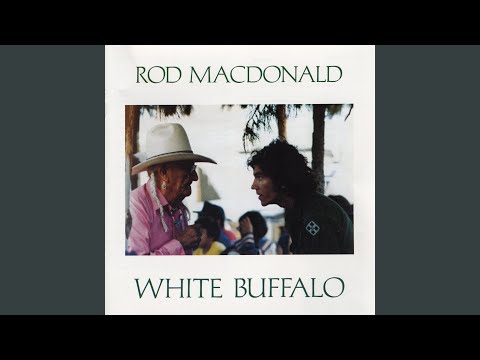
I think we did 17 takes of one song and still didn’t get it, but every once in a while we’d really nail something. And then it was just a question of mixing it, but we played live as a band for almost everything in that recording. And White Buffalo, the one after that we played live as a band. Then we’d touch it up, add an instrument here and there.
Then you are in a vocal booth, so your vocals not bleeding onto everything else anyway. So, then if you get a really good band recording, but you didn’t sing it that well, you put the headphones on and you sing it with the band track. And really, if you close your eyes, it’s the same experience. It’s not really that different.
The only thing that’s slightly different is that the way you sing it might slightly impact the way the band plays it. You lose that if you’re singing to a track. Of course, you have to sing it to the way they played it.
Rick: Yeah. I found that when I was in the studio, what worked best for me is I’d go in, I’d play my guitar and I’d sing the song, and then all the others would come in and they’d do their instrumentation.
Rod MacDonald: A lot of guys work that way. When we recorded later that night back in 2014, Mark and I came back from a gig and we just started playing in the studio late at night for our own enjoyment. And he said, “Got any new songs?” And I said, “Yeah, well, here’s one.” And then he says, “We should record this.”
And he set up a couple of mics and we discovered a different working method that really has worked fairly well since that time, which was to record the songs mostly because they were new songs that we hadn’t been playing in front of audiences. They weren’t totally formulated in a way musically. And we would sit across from each other and we’d record them, bass, guitar, and voice, and we’d do two, three, four, takes until I could say, “Okay, that’s the exact arrangement.” And then we would do one more take doing the same tempo and the same arrangement, but not singing.

Rod MacDonald
We’d have a guitar and bass track, and then sometimes we’d even just not use the bass track, use the guitar track, and then we’d bring in the other musicians and then I would sing it again. And the reason I liked doing it, I found that to be very productive way to work for two good reasons, particularly the drummer and keyboard players. If you work with a fixed track, they can really hone in on it, and by the second or third take, they’ve really got it down.
Whereas if you’re doing it live from scratch each time, each track has a slightly different feel and they’re still kind of trying to find it. So if you have a fixed guitar track that you think is good, that’s just the way you want to play it and that it’s comfortable to sing it to, then you can bring in the other instruments and play to it. And they can play to that same track and each time they’ll get it more precisely until finally, usually around the third or fourth take, because these guys are pros. We wouldn’t use my original vocal, but I would sing it with them live each time so that I was instinctively in tune with what was going on live and that
We’d kind of get a bit of that live chemistry that way. And I found that to be a good way to work.
Rick: As a songwriter, have you ever felt that you ran out of steam with ideas or do you, do they just sort of percolate along as you’re living your life?
Rod MacDonald: It’s funny. I sometimes feel like, “Wow, I’m supposed to be this big deal songwriter and I haven’t written anything in months. And then I’ll go to Woodstock and I’ll be having dinner with Mark Dann, and he’s kind of been my musical partner behind the scenes for 50 years.
And he’ll say to me, “So what’s your problem? Anyway? All this stuff’s going on in the world in your life, and you’re living your life and you haven’t written anything. What’s your problem? Are you just like falling asleep at the wheel here?”
And then I’ll go, “Okay, and I’ll say, well, I’ll tell you what, I got some stuff in my laptop. Why don’t you turn me loose in the studio? And I’ll see what I can do.” And then once or twice I’ve gone into the studio, I dunno, midnight, and he’ll set me up and he’ll say, “Good, I’m going to bed after at one o’clock, and I’ll just go through my computer and start making up music to the words that are in there, and I’ll end up with seven or eight songs and then we’ll start working on a new cd. And then while we’re working on it, I’ll write a few more. I don’t know what started, I think Rants and Romance really, by the time we started recording I had pretty much written most of the songs.
BONUS VIDEO!